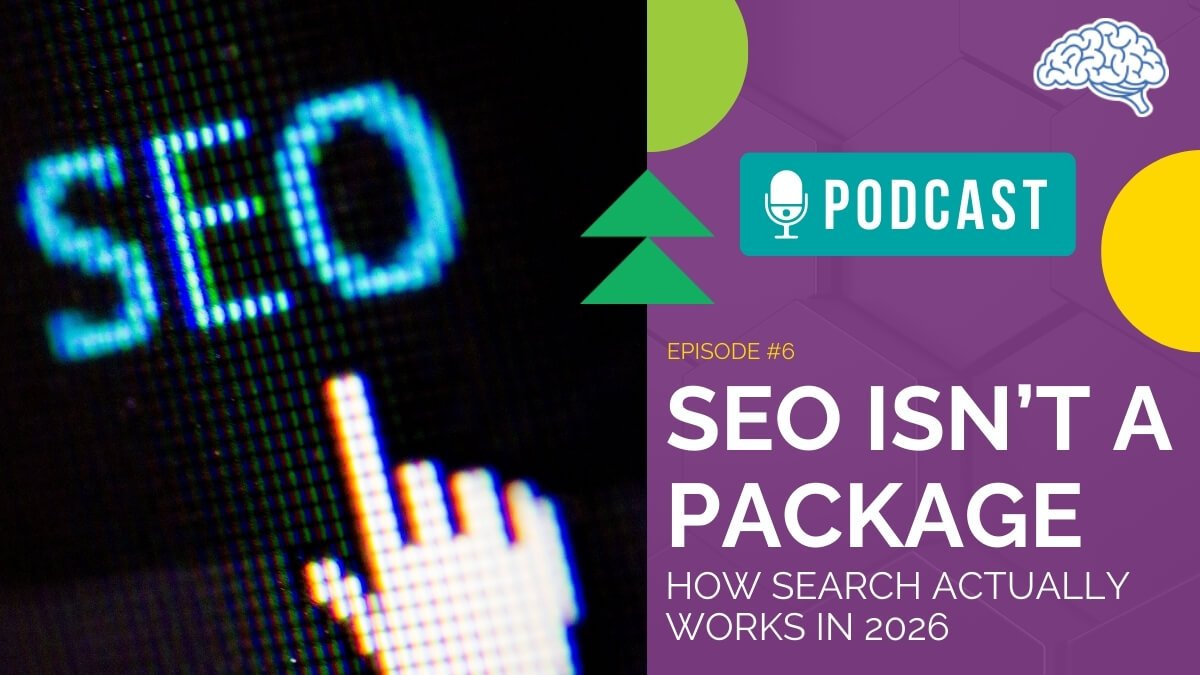
What do cavemen, Italian restaurants, and 38 open browser tabs have in common? They all help explain why SEO still matters - and why most people misunderstand it.
In this episode of Meeting of the (Strong) Minds, Eric, Jenny, and Luke kick off the new year by breaking down search engine optimization in plain English. No hacks. No magic packages. Just an honest conversation about how people actually search, what matters in 2026, and why SEO has always been about helping others understand what you do.
Listen to the Episode
Listen on Spotify
Listen on Apple Podcasts
Highlights from the Conversation
SEO Isn’t a Package — It’s a Process
The episode opens with a hard truth: SEO is not something you “buy.” It’s not a checklist, a monthly deliverable, or a magic keyword formula. At its core, SEO is about making your business easier to understand - for search engines, AI tools, and real humans looking for answers.
Local SEO vs. National SEO (Why Most Advice Doesn’t Apply)
Eric explains one of the biggest disconnects in SEO education. Most advice online is written for national brands, content farms, or businesses chasing millions of impressions. But most small businesses don’t need traffic - they need the right person in the right location at the right time.
If you’re a plumber in Wheeling, you don’t need to outrank every plumber in America. You just need to be more visible than the handful of competitors down the street. That mindset shift alone eliminates a lot of unnecessary stress.
How People Actually Search in 2026
Jenny walks through her real-world search behavior - skipping ads, scanning map results, ignoring directories, and reading reviews before clicking a website. The takeaway is simple: ranking #1 doesn’t matter if users don’t trust or click the result.
The group also discusses how searches vary by intent. “Restaurants near me” looks nothing like “how to fix a washing machine,” and optimizing for one doesn’t help with the other. Understanding search intent matters more than chasing keywords.
Google, AI, and the Myth That SEO Is Dying
With AI overviews, ChatGPT, Gemini, and Perplexity entering the picture, many business owners are asking the same question: is SEO dead?
The answer is no - but the name might change. Whether you call it SEO, AEO, GEO, or something else entirely, people are still searching for answers. AI tools still pull from the same sources: websites, videos, directories, and published content. If you don’t explain what you do online, these systems have nothing to learn from.
Your Website Is Still Your Best Asset
One of the most practical moments of the episode comes when Eric challenges business owners to look at their own websites. One-paragraph About pages. Bullet-point service lists. Generic contact forms. These don’t help Google - and they don’t help customers.
If people call your business every day asking the same questions, those answers belong on your website. Not as fluff. As real, detailed explanations that prove you know what you’re doing.
What You’ll Learn in This Episode
- Why SEO has never been about tricks or hacks
- The difference between local and national search strategies
- How real people scan search results
- Why AI still depends on human-created content
- What to fix on your website before spending money on ads
- How answering real questions improves visibility everywhere
Who Is This Podcast For?
This episode is for business owners who feel overwhelmed by SEO advice, confused by AI headlines, or frustrated by vague marketing reports.
If you want a clearer understanding of how people find businesses today - and what actually moves the needle - this conversation cuts through the noise.
Follow & Subscribe
Want to keep up with the latest episodes? Follow Meeting of the (Strong) Minds wherever you listen or watch:
Have SEO questions you want us to break down in a future meeting? Tag us on Instagram, Facebook, or LinkedIn and keep the conversation going.