Stop Thinking About Your Podcast as Just a Podcast
It seems like everyone has a podcast.
Celebrities have podcasts. Comedians have podcasts. Sports networks have hundreds of them. Your neighbor probably has one. And somewhere along the way, businesses started hearing that they needed one too.
But the bigger question is not whether your business should have a podcast.
It is what you are actually going to do with it.
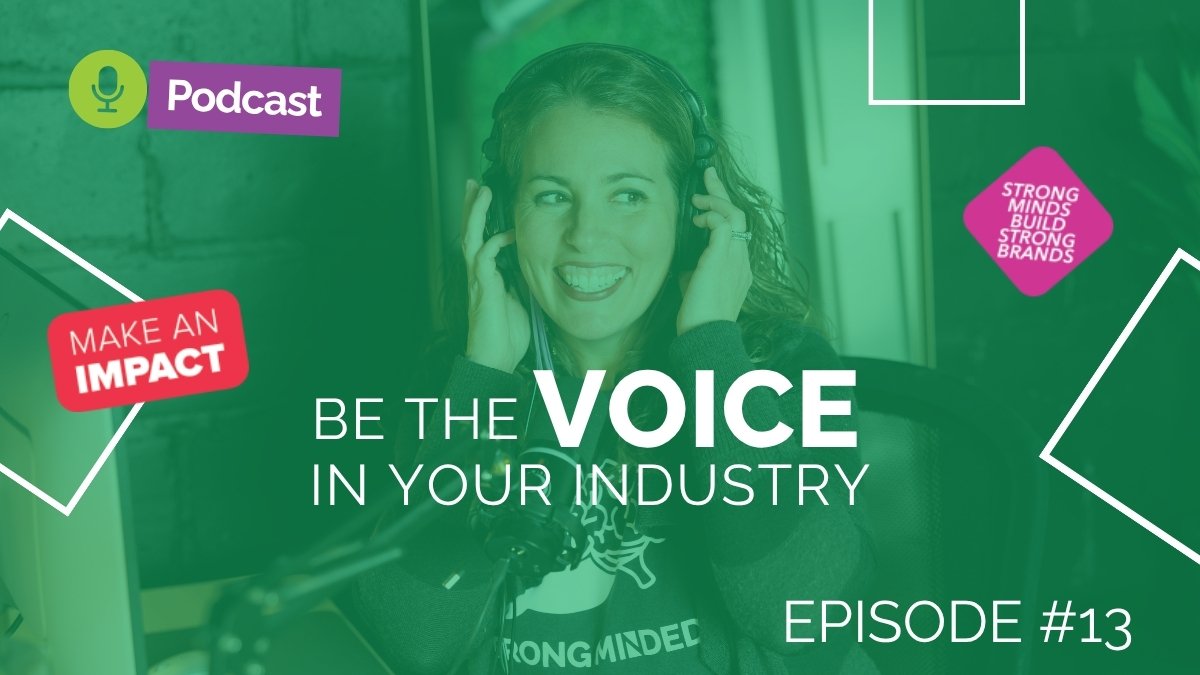
In Episode 13 of Meeting of the (Strong) Minds, Eric, Jenny, and Luke talk about why podcasting still matters in 2026, what businesses should realistically expect from it, and why the actual podcast episode might not even be the most valuable thing you create.
The short version: if your plan is to launch a podcast, attract thousands of listeners, land sponsors, and turn it into a new revenue stream, you may want to temper your expectations.
But if you want a way to establish expertise, create a library of marketing content, give your company a personality, and build deeper relationships with a smaller audience, podcasting still has a lot to offer.
Listen to the Full Episode
Prefer Apple? Listen and subscribe on Apple Podcasts.
People Listen to Podcasts Differently
The episode starts with Eric doing a little unofficial analysis of Jenny and Luke's podcast habits.
Jenny listens to everything from the Jim Hill Media Network to Mel Robbins and SmartLess. She often discovers shows through social media clips and listens primarily through Spotify while driving or working. Subject matter matters, but so do the sound quality, pace, personalities, and overall production.
Luke's podcast history goes much further back. He came into podcasting through radio and early shows like WTF with Marc Maron, Bill Simmons, Radiolab, This American Life, and Serial. His current listening habits range from fantasy football shows to comedy podcasts to multi-hour history programs that feel more like audiobooks.
That variety illustrates one of the biggest strengths of podcasting.
There is no single correct format.
A show can be five minutes or three hours. It can be highly produced or conversational. It can tell a serialized story, answer industry questions, interview guests, entertain an audience, or go incredibly deep into a tiny niche.
But how people discover those shows has changed dramatically.
Podcast Discovery Is Much Harder Than It Used to Be
There was a time when someone could open a podcast app, search a subject like Disney or fantasy football, and realistically browse most of the available options.
That world is gone.
Today, there are an enormous number of shows competing for attention. Add celebrity podcasts, established media companies, professional studios, and huge production budgets, and it becomes increasingly difficult for an unknown show to simply appear in search and build an audience from there.
That means businesses should not rely on Spotify or Apple Podcasts to do all of the promotional work.
Discovery now frequently happens somewhere else first.
Jenny found Mel Robbins through social media. Luke will jump into certain shows because he sees a compelling clip. A particular guest might lead someone to search out a full interview.
The podcast is increasingly the destination.
Social media clips, short-form videos, quotes, blogs, and other content are what get someone there.
Your Podcast Might Not Be the Most Important Content You Create
This is one of the biggest shifts the team discusses in the episode.
Luke advises clients to begin with one very realistic assumption:
Be prepared for nobody to listen.
That does not mean the podcast failed.
A 30-minute conversation can become short-form videos, social posts, graphics, quotes, blogs, emails, website content, and ideas for future campaigns.
The recording becomes the raw material for everything else.
Instead of repeatedly asking a business owner to write articles, approve dozens of social posts, or provide thoughts on every individual topic, you can simply have a conversation.
That conversation captures the person's actual language, expertise, stories, and personality.
From there, the marketing team can build.
The value of it now for us is all of the ancillary stuff. Those are the primary things now.
Luke
Eric compares it to the way people consume sports today. You can watch an entire football game, but you can also see every important play through highlights afterward.
Podcasting increasingly works the same way.
The full conversation exists for the people who want it. But six or eight strong moments pulled from that conversation may reach far more people.
In some ways, the trailer has become just as important as the movie.
Know What You Are Qualified to Talk About
Jenny brings the conversation back to something every business should ask before buying microphones or building a studio:
What are you actually an expert in?
And perhaps more importantly, are you willing to talk openly about it?
A successful business podcast requires more than explaining your list of services every month.
You need stories.
Opinions.
Experiences.
Lessons learned.
Answers to questions customers actually ask.
Behind-the-scenes knowledge that somebody outside your industry may not understand.
You also need to be willing to share some personality.
A podcast gives people the opportunity to get to know the people behind the business in a way that a traditional advertisement rarely can.
If you are unwilling to share those ideas or have candid conversations about your expertise, podcasting may not be the right medium.
Consistency Matters More Than Frequency
You also have to be willing to keep doing it.
That does not mean publishing every day or even every week. Meeting of the (Strong) Minds is a monthly show.
The important part is establishing a schedule you can actually maintain.
Eric points out that a business might produce a show for six months without seeing much response. Then an episode in month seven could finally connect with the right audience and start building momentum.
The problem is that many podcasts never make it that far.
They launch with enthusiasm, publish several episodes, and disappear.
If you are starting a podcast, ask yourself whether you are willing to continue producing it even when the early audience is small.
Because the first several episodes may feel like you are talking to yourself.
A Small Podcast Audience Can Still Be Extremely Valuable
Podcasting creates a different kind of relationship than many other marketing channels.
Jenny describes how regular listeners can begin feeling like they personally know the hosts they hear every week. Luke points out that there is an actual term for this: a parasocial relationship.
You hear the same voices regularly.
You learn their personalities.
You hear their stories.
You know their opinions.
Eventually, those hosts can begin feeling more like familiar acquaintances than strangers on the internet.
That connection can become incredibly powerful for a business.
Eric explains that he would often rather have 100 consistent podcast listeners than 10,000 people casually scroll past a short-form video.
Those 100 listeners may actually know the company.
They may email.
They may comment.
They may recommend the business.
They may remember what someone said six months ago.
They may eventually become customers or advocates.
I'd much rather have a hundred listeners of a podcast than 10,000 viewers of a short-form video.
Eric
That does not mean reach is irrelevant. The short-form content helps people discover you.
But depth matters too.
Podcasting is one of the few marketing formats that can give someone 30 minutes, an hour, or even several hours with your brand.
Podcasts Can Build Trust
That familiarity also helps explain why podcast advertising can work so well.
A recommendation from a podcast host can feel very different from a traditional commercial.
Someone may have listened to that host for years. They trust their opinions. They understand their personality. So when that person recommends a product, service, book, restaurant, or business, the recommendation can carry more weight than a random advertisement.
Businesses can benefit from that same principle without ever selling a sponsorship.
If your customers hear you consistently answering questions and demonstrating expertise, they begin understanding how you think.
They hear how you treat people.
They learn what matters to you.
They become more comfortable with your company before they ever contact you.
That trust can have a real return on investment.
Do Not Start With the Microphone
One of the easiest places to get distracted with podcasting is equipment.
Which microphone?
Which camera?
Which software?
Which studio?
Those things matter eventually.
But they are not the reason someone listens.
Eric's advice near the end of the episode is simple: if you really want to experiment with podcasting, start recording.
A phone can record a conversation.
You can improve the audio later. You can build a studio later. You can add cameras, graphics, better lighting, editing, and a distribution strategy once you know the idea actually works.
The first question should not be whether you own the right microphone.
It should be whether you have something worth saying.
The Strong Minded Agency Take
Stop thinking about your podcast as just a podcast.
For businesses, the full episode can be valuable, but it may only be the starting point.
A podcast gives you a consistent reason to sit down and talk about what you know. That conversation can become blogs, videos, social media posts, emails, website content, and dozens of other marketing assets.
At the same time, the people who do choose to listen to the full conversation get something increasingly difficult to create online: time with your brand.
They hear your voice.
They understand your perspective.
They get to know the people behind the company.
And if you keep showing up, some of those listeners can become the most loyal members of your audience.
You do not necessarily need a million listeners.
You need the right ones.
What This Episode Covers
- How Jenny and Luke discover and consume podcasts
- How podcasting has evolved from early audio shows into a major media industry
- Why discovering new podcasts through Spotify and Apple has become more difficult
- How social clips and short-form video now drive podcast discovery
- Why businesses should temper expectations about podcast monetization
- How one podcast conversation can become an entire library of marketing content
- Why expertise, stories, and personality matter more than expensive equipment
- How often a business should realistically publish a podcast
- Why consistency matters when the initial audience is small
- How podcasts create unusually strong relationships between hosts and listeners
- Why 100 loyal listeners can sometimes be more valuable than thousands of passive views
- How businesses can use podcasting to build trust and authority
- Why you should start with the conversation instead of worrying about the technology
Follow & Subscribe
Want to keep up with the latest episodes? Follow Meeting of the (Strong) Minds wherever you listen or watch:
Thinking about starting a podcast for your business? Strong Minded Agency can help you develop the concept, record the conversation, produce the show, and turn each episode into content you can use throughout your marketing.