Should Your Business Even Be on Social Media Anymore?
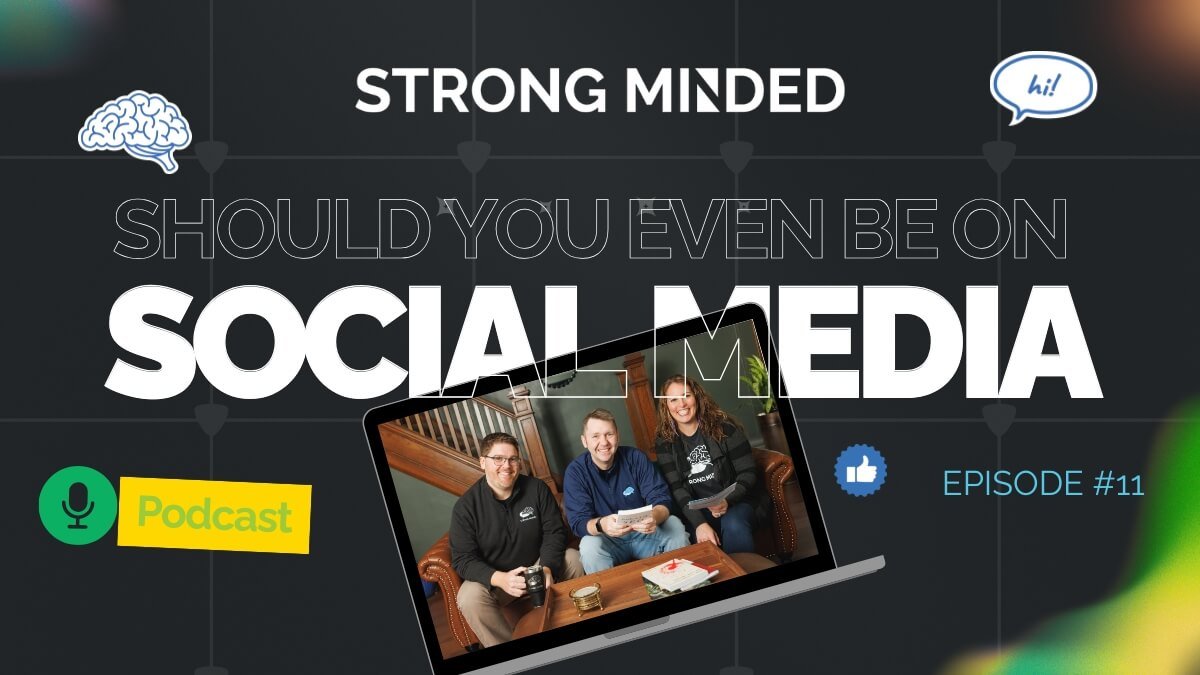
If you are not going to manage it, you might as well not have it. That is Luke cutting straight to it early in Episode 11 of Meeting of the (Strong) Minds, and it sets the tone for everything that follows. This month, Eric, Jenny, and Luke get into the real state of social media for businesses in 2026: what platforms to be on, how to show up without burning out, and the big question every business owner is asking right now about whether you still need to pay to be seen.
Listen to the Full Episode
Prefer Apple? Listen and subscribe on Apple Podcasts.
You Do Not Have to Be Everywhere. But You Do Have to Be Somewhere.
The team opens with a question that trips up a lot of business owners: do you need to be on every platform? The short answer from all three of them is a firm no. Jenny puts it plainly: trying to manage six platforms at once is setting yourself up to fail. Pick one or two, know where your audience actually lives, and focus your energy there. A shoe brand that is not on Instagram is missing the point.
Luke breaks down how each platform tends to serve a different purpose. Facebook is the catch-all, the most widely used and the most forgiving in terms of content format. Instagram rewards visual brands and tends to move fast. LinkedIn is where thoughtful, professional content earns its place. TikTok and short form video reward personality and timing above everything else. Trying to cross-post everything to all of them without adjusting the content for each platform is not a strategy. It is just noise.
Eric frames it well: think of Facebook like a Windows computer. Everyone has it, everyone can use it, and it does a little bit of everything. The more specialised platforms are like Macs. Built for a specific kind of creator, a specific kind of audience. Know which one your business is before you commit.
What You Post Matters More Than How Often You Post
One of the most practical frameworks Eric shares in this episode is his three-question test for every post: does this educate someone, inspire someone, or entertain someone? If the answer is none of the above, it is probably just promotional filler, and promotional filler is what people scroll straight past.
Jenny builds on this with something that sounds simple but makes a real difference: know who your brand is before you post anything. Pick a front-facing personality, a set of core values, a tone. She uses Mr. Rogers as the example. If Mr. Rogers would not post it, does it really fit your brand? It sounds like a small thing, but without that internal compass, most businesses end up posting inconsistently and confusing their audience about who they actually are.
Luke takes a different angle and talks about the balance between being proactive and being reactive. He uses Tottenham Hotspur as a brilliantly painful example: a team that kept announcing concert series and brand collaborations while their fans were miserable about results on the pitch. The content was planned months in advance and just went out anyway, completely out of step with the mood of the audience. The lesson is that scheduling ahead is smart, but someone still needs to have a hand on the wheel. Tone deafness on social media is hard to come back from.
"Your brand needs to know who you are. Pick a front facing person, know your core values, and then if everything bounces off of that, you cannot go wrong."
Jenny Snyder
Paid vs Organic: Do You Have to Pay to Play?
This is the part of the conversation that most businesses want a straight answer to, and to the team's credit, they give one, even if it is a nuanced one. Jenny is honest about it: organic reach is declining. If you want to get in front of a very specific group of people and you want to do it now, paid is the faster route. The targeting tools available mean you can get your message to exactly the right person at exactly the right time.
But Luke pushes back on the idea that paid is the whole answer. When someone organically finds a brand, scrolls through it, and decides they like it, that connection tends to be more lasting than someone who clicked a sponsored post. And Eric points out something that often gets missed: a strong organic presence makes your paid ads perform better. If someone sees your ad and then goes to check your profile and finds nothing but more ads, the trust evaporates. Build the organic foundation, then use paid to amplify the moments that matter, a three day sale, a launch, a specific offer to a specific audience.
The goal, as Eric puts it, is not to choose one or the other. It is to build toward a place where you do not have to pay as much, because your audience is already there and already engaged.
"If you build up your organic audience, people are going to be more receptive to your paid ads. And if you are just random, that is a much harder sell."
Luke Hladek
The Strong Minded Agency Take
Eric closes the episode with a few practical rules worth keeping somewhere you can see them. Pick one or two platforms and actually commit to them. Stay consistent, even if that just means showing up regularly rather than perfectly. Do not chase likes, especially if your audience is not the type to hand them out. And if social media genuinely feels like a chore to you, find someone on your team who actually enjoys it and give them the space to do it well.
Social media is still one of the most powerful and affordable tools a business has. It is also one of the easiest to do badly. The difference between doing it well and doing it badly is almost never budget. It is almost always intention.
What This Episode Covers
- Why a dormant social account can be more damaging than no account at all
- How to choose the right platform based on your audience, your content type, and your goals
- What Facebook, Instagram, LinkedIn, and TikTok are each best suited for in 2026
- The three things every post should do: educate, inspire, or entertain
- Why knowing your brand personality is the foundation of everything else
- The Tottenham Hotspur story and what it teaches us about tone deafness on social
- Paid vs organic: what is actually working, what is not, and why you probably need both
- Why likes are not the metric that matters most for most businesses
Follow & Subscribe
Want to keep up with the latest episodes? Follow Meeting of the (Strong) Minds wherever you listen or watch:
Have thoughts on social media for businesses? Tag us on Instagram, Facebook, or LinkedIn and join the conversation.

Recent Posts