How Spam Broke Our Inboxes (And Why Email Still Works)
This blog was created by Eric Hersey, with limited assistance by AI (mainly because the CAN-SPAM Act was a bit confusing).
Anyone else still have control of their high school or college email address? It likely ends in @yahoo, @hotmail, and maybe even @aol.com. If you're like me, you still have it, but it sits in the background and gets checked once a month. And no, it's not because it was created by an 18-year-old me (aka - not an email I want to claim in front of other grown adults). The reason it's in a retirement home is because of the constant spam emails that I just can't get rid of.
I haven't used this email for new signups for ages, yet I have new emails coming in daily for window replacement, weight loss drugs, and occasional spoofed PayPal transactions. You can try to unsubscribe, but that's not gonna work. They have the link, but adding your email into their form just creates more.
Don't we have laws against this? How the heck do we continue to get attacked with emails we haven't signed up for? How does anyone win in email marketing when we've all started to deal with this?
The truth is email marketing still has a large place at the marketing table. But like everything else in marketing, it's getting noisy. There are ways to stay out of the spam and still have that direct conversation with your customer.
Yes, There Are Laws (And Why They Don't Fully Work)
Unless you are a nerd like me, you've probably never heard of the CAN-SPAM Act. This was signed back in 2003, when email was becoming quite popular, and put some baseline rules in place for commercial emails. Back then, we didn't have junk and spam folders. We couldn't filter out emails by words. We literally got everything in one inbox, and you had to really sift through it to see what was real and what was spammy.
And yes, there were still tons of spammy emails. I'm not sure if this is when the Nigerian Prince scheme came into play, but there was plenty of that.
So the Controlling the Assault of Non-Solicited Pornography and Marketing Act (thank you for shortening this to CAN-SPAM) was created. And what did this do? Commercial email accounts had to follow these regulations:
- Senders must clearly identify themselves
- Subject lines must reflect the actual content
- A physical mailing address must be included
- Every email must contain a clear unsubscribe option
- Opt-out requests must be honored within 10 business days
Today, you will see a lot of this reflected by the good guys. Of course, you will also see ways around it by the less trustworthy, annoying spammers.
If you are wondering why there are still some bad actors, there are plenty of gaps in this act.
Take, for example, this loophole.
CAN-SPAM allows companies to email you without permission, as long as they:
- Identify themselves
- Include an unsubscribe link
- Stop emailing you after you opt out
That means a business can legally email millions of people who never asked to hear from them. They only have to stop once someone unsubscribes.
And yes, many companies buy third-party email lists so they can continue to spam the hell out of you.
And if you want to press charges against those violating the rules, good luck. You can officially forward the email to spam@uce.gov or file a complaint with the FTC.
But unless you want to spend all day fighting this, just mark it as spam and move on.
Why People Are So Burned Out on Email
It's not surprising that email is less effective when you are hammered with emails you've never signed up for. On top of that, every purchase you make anywhere starts to send digital receipts, alerts of upcoming sales, and questionnaires. Every time you enter your email anywhere, expect an onslaught of emails on a monthly basis.
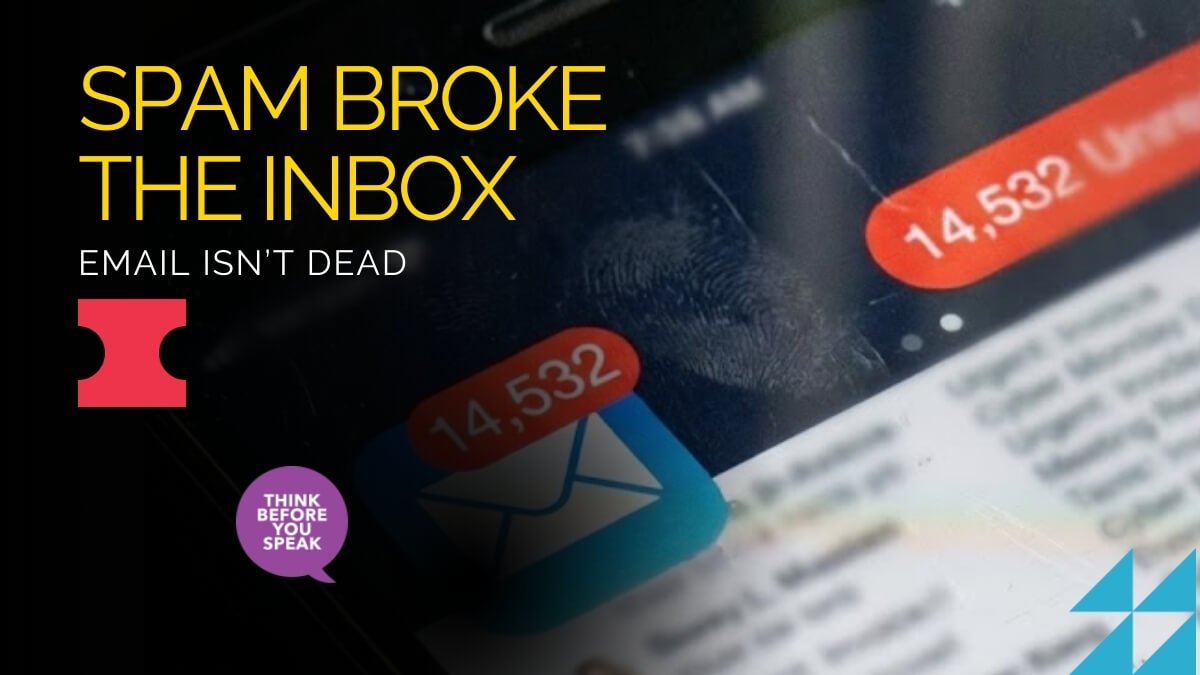
With emails on our phones, you're getting smacked in the face with new alerts for every email you get. Many users give up. This is why the red dot icon that alerts you to how many unread emails you have is in the hundreds, sometimes thousands. Because of this buildup, many real emails go untouched, unnoticed, and ignored.
For me, I've abandoned so many old reliable email addresses because once they get sold to a third party, I spend entirely too much time marking junk and clearing the inbox just so I can actually see the real ones that come through.
As a business, why even try to get noticed via email?
So Why Email Marketing Still Works
Not to be all doom and gloom, but have you seen it out there? Yeah, the digital landscape. You know, social media and websites. Let's be real, email is not the only thing broken, or at least hard.
Try posting a link on social media these days. Tell me how many people it reached.
Go ahead and buy some display ads and tell me how many people actually noticed the ad and didn't scroll right on by.
The advertising space online is cluttered, filled with slop, and we as users are over it. We ignore the ads. We have limited visibility into pages we follow unless we actively seek out and engage with the content weekly. The algorithms still rule, and they favor brands that are paying big bucks or are well equipped with a team that focuses solely on social media engagement.
And if we've learned one thing, emails still make it to an inbox, for the good and the bad guys.
What Subscribers Actually Want From Email
Even though inboxes are full and everyone is sending, we can still stand out and provide value. Unless you are heartless, I bet you wouldn't skip a handcrafted email from your Grandma or your best friend, right? We don't hate emails. We just hate emails from people we don't know.
It's proven that emails perform better than social media. From a visibility standpoint, average open rates are 20-40%. Your reach on social media, organically, is usually around 5% of your followers. More people see your content, and it lives in a safe place where accidentally scrolling won't cause you to lose that post forever (looking at you, Twitter/X).
You also have a little more control over email in terms of actually giving the user what they want. You can segment your list and deliver content that is made specifically for them, unlike social media where you post to the masses. This customization and automation make a huge difference between being annoying and being helpful.
And users don't really hate email. People get excited when you give them a coupon code. They love getting alerts when news breaks. Users still like receiving personal messages that inspire, entertain, or educate. They just want to choose how frequently that happens.
So if you use spammy techniques, be prepared to get unsubscribed quickly or sent right to spam.
Email Isn't Dead. Bad Email Is.
Email didn't fail. Trust did.
Spam, shortcuts, purchased lists, and lazy automation trained all of us to ignore the inbox. That's not an email problem. That's a behavior problem. And the brands paying attention already know this.
The companies winning with email today aren't sending more. They're sending less, with intention. They ask permission. They explain what's coming. They respect frequency. They treat email like a conversation, not a megaphone.
Email still works because it's one of the last places where a brand can speak directly to someone without fighting an algorithm, bidding against competitors, or hoping the post didn't disappear in five seconds. But that only works if the message earns its place there.
So if you're a business wondering whether email is still worth it, the answer isn't yes or no. It's how.
If your email sounds like spam, it'll be treated like spam.
If it feels earned, relevant, and human, it still has a seat at the table.
And maybe, just maybe, it won't end up in the retirement inbox with your old Hotmail account.

Recent Posts